%2Ffit-in%2F250x250%2Fguide_websites%2F1344%2Fimages%2Fseahorse.png&w=1920&q=100)
/users/c304790d-74c4-4726-bfae-08ef6cd001e1/ratecard/531076563_18521272315043772_2184078600652752956_n-mf6dw3g0.jpg)
%2F300x300%2Fusers%2Fc304790d-74c4-4726-bfae-08ef6cd001e1%2Fratecard%2F531076563_18521272315043772_2184078600652752956_n-mf6dw3g0.jpg&w=256&q=75)
%2F300x300%2Fusers%2Fc304790d-74c4-4726-bfae-08ef6cd001e1%2Fimages%2F7-fishing-in-fl-2740.jpg&w=256&q=75)
%2F300x300%2Fusers%2Fc304790d-74c4-4726-bfae-08ef6cd001e1%2Fimages%2Fsmallmouth-bass-fishing-islamorada-2694.jpg&w=256&q=75)
%2F300x300%2Fusers%2Fc304790d-74c4-4726-bfae-08ef6cd001e1%2Fimages%2Fanglers-fishing-islamorada-2714.jpg&w=256&q=75)
%2F300x300%2Fusers%2Fc304790d-74c4-4726-bfae-08ef6cd001e1%2Fimages%2Ftuna-trio-bites-florida-2709.jpg&w=256&q=75)
%2F300x300%2Fusers%2Fc304790d-74c4-4726-bfae-08ef6cd001e1%2Fimages%2Fblackfin-tuna-fishing-florida-2769.jpg&w=256&q=75)
%2F300x300%2Fusers%2Fc304790d-74c4-4726-bfae-08ef6cd001e1%2Fimages%2F13-fish-catch-in-florida-2830.jpg&w=256&q=75)
%2F300x300%2Fusers%2Fc304790d-74c4-4726-bfae-08ef6cd001e1%2Fimages%2Fabundant-catch-islamorada-2616.jpg&w=256&q=75)
%2F300x300%2Fusers%2Fc304790d-74c4-4726-bfae-08ef6cd001e1%2Fimages%2Fwahoo-fish-florida-coast-2555.jpg&w=256&q=75)
%2F300x300%2Fusers%2Fc304790d-74c4-4726-bfae-08ef6cd001e1%2Fimages%2Fislamorada-fishing-trip-best-catch-2893.jpg&w=256&q=75)
%2F300x300%2Fusers%2Fc304790d-74c4-4726-bfae-08ef6cd001e1%2Fimages%2Fbountiful-blackfin-tuna-atlantic-bonito-2838.jpg&w=256&q=75)
Expert-Guided Beginner Fishing in Islamorada
 Islamorada, FL
What you will be catching:
 Atlantic Sailfish
 Blackfin Tuna
 Blue Marlin
 Greater Amberjack
 Wahoo Fish
- 8-hour offshore fishing experience targeting Mahi, Tuna, and Wahoo
- Expert crew provides hands-on instruction and all fishing equipment
- Beginner-friendly trip from renowned Islamorada fishing destination
Trip Pricing and Availabilities:
Reel in Your First Big Catch off Islamorada
Hey there, future anglers! If you've been itching to try your hand at deep sea fishing but weren't sure where to start, boy do I have the trip for you. Captain Richard's full-day beginner-friendly offshore adventure out of Islamorada is the perfect way to get your feet wet (figuratively speaking, of course). With 8 hours on the water, you'll have plenty of time to learn the ropes and hopefully land some impressive catches to brag about back home.
What to Expect on the Water
As soon as we push off from the dock, you'll feel the excitement building. The crew's got your back every step of the way, so don't sweat it if you've never held a rod before. We'll cruise out to some prime fishing spots where the big boys hang out - we're talking Mahi Mahi, Snapper, Tuna, and maybe even a Wahoo if lady luck's on our side. The best part? Everything you need is right here on the boat. Just remember to slather on that sunscreen, pack some grub, and bring whatever you want to sip on throughout the day. Trust me, nothing beats cracking open a cold one while waiting for that next big bite.
Fishing 101: Offshore Edition
Alright, let's talk shop for a sec. Offshore fishing is a whole different ball game from tossing a line off the pier. We'll be using some serious gear out here - think heavy-duty rods and reels that can handle the big boys swimming around. The crew will show you the ropes on everything from baiting your hook to proper casting techniques. We might do some trolling, where we drag lines behind the boat, or maybe some bottom fishing if the bite is hot down deep. Don't worry if it sounds Greek to you now - by the end of the day, you'll be throwing around fishing lingo like a pro.
Top Catches This Season
Now, let's get to the good stuff - what kind of fish might end up on the end of your line? Islamorada's waters are teeming with some real beauties, and each one's got its own personality when it comes to putting up a fight.
Species You'll Want to Hook
Blackfin Tuna: These speed demons are like the sports cars of the sea. They're not the biggest tuna out there, but what they lack in size they make up for in fight. Best time to target these guys is usually fall through spring. When you hook one, hold on tight - they'll give your arms a workout you won't forget!
Atlantic Sailfish: Now we're talking bucket list fish. These bad boys are known for their incredible aerial displays - picture a 7-foot fish leaping clear out of the water, its sail-like dorsal fin glistening in the sun. Winter and early spring are prime sailfish season here. Landing one of these is the fishing equivalent of hitting a home run in the World Series.
Blue Marlin: The holy grail of offshore fishing. These massive fish can top 1,000 pounds and put up a fight that can last hours. They're most common in the summer months, but catching one any time of year is a real trophy. Just hooking into a blue marlin will get your heart racing like nothing else.
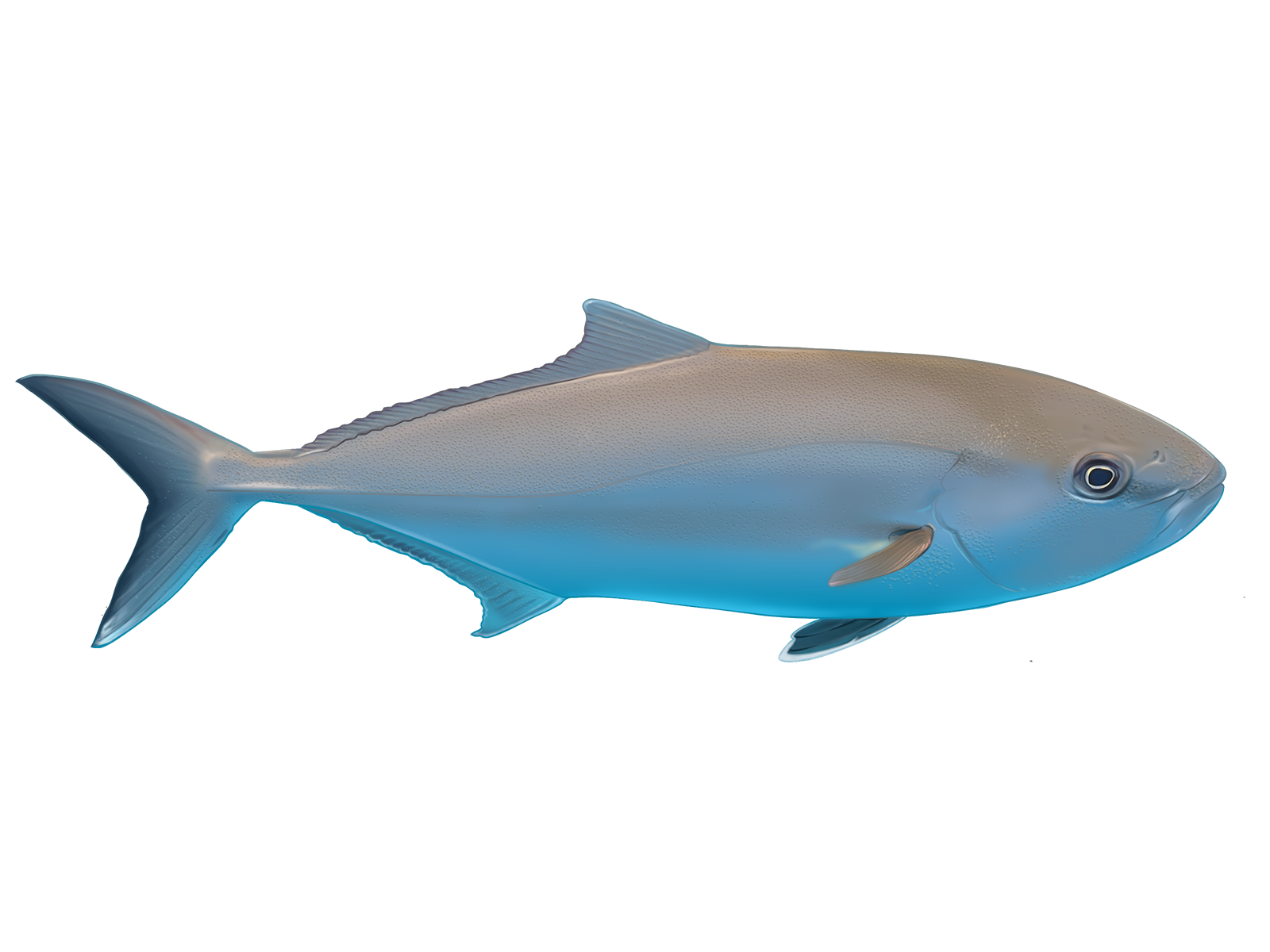
Greater Amberjack: AJs, as we call 'em, are the bulldogs of the ocean. They live around deep wrecks and reefs, and when you hook one, it's like trying to reel in a freight train. These tough customers are around all year but really pick up in the cooler months. Trust me, your arms will remember an amberjack fight for days.
Wahoo Fish: If you want to see your reel smoke, pray for a wahoo. These streamlined speedsters can rip line off your reel at highway speeds. They're around all year but tend to show up more in the winter months. The meat on these guys is top-notch too - some of the best eating in the ocean if you ask me.
Why Anglers Keep Coming Back
Look, I've been guiding these waters for years, and I still get a kick out of seeing someone's face light up when they feel that first big hit on their line. There's something special about Islamorada fishing that keeps folks coming back year after year. Maybe it's the crystal-clear waters, or the chance to tangle with some real sea monsters, or just the laid-back Keys vibe. Whatever it is, I guarantee you'll be hooked (pun intended) after your first trip.
Time to Book Your Spot
So what do you say? Ready to scratch that fishing itch and make some memories out on the big blue? Captain Richard's trip is the perfect way to dip your toes into the world of offshore fishing. With a max of 6 guests, you'll get plenty of one-on-one time with the crew to hone your skills. And who knows? You might just end up with the catch of a lifetime and a story you'll be telling for years to come. Don't let this one be the "one that got away" - book your spot now and let's get you out on the water!
Learn more about the species
Atlantic Sailfish
Atlantic Sailfish (Istiophorus albicans) Fish Description
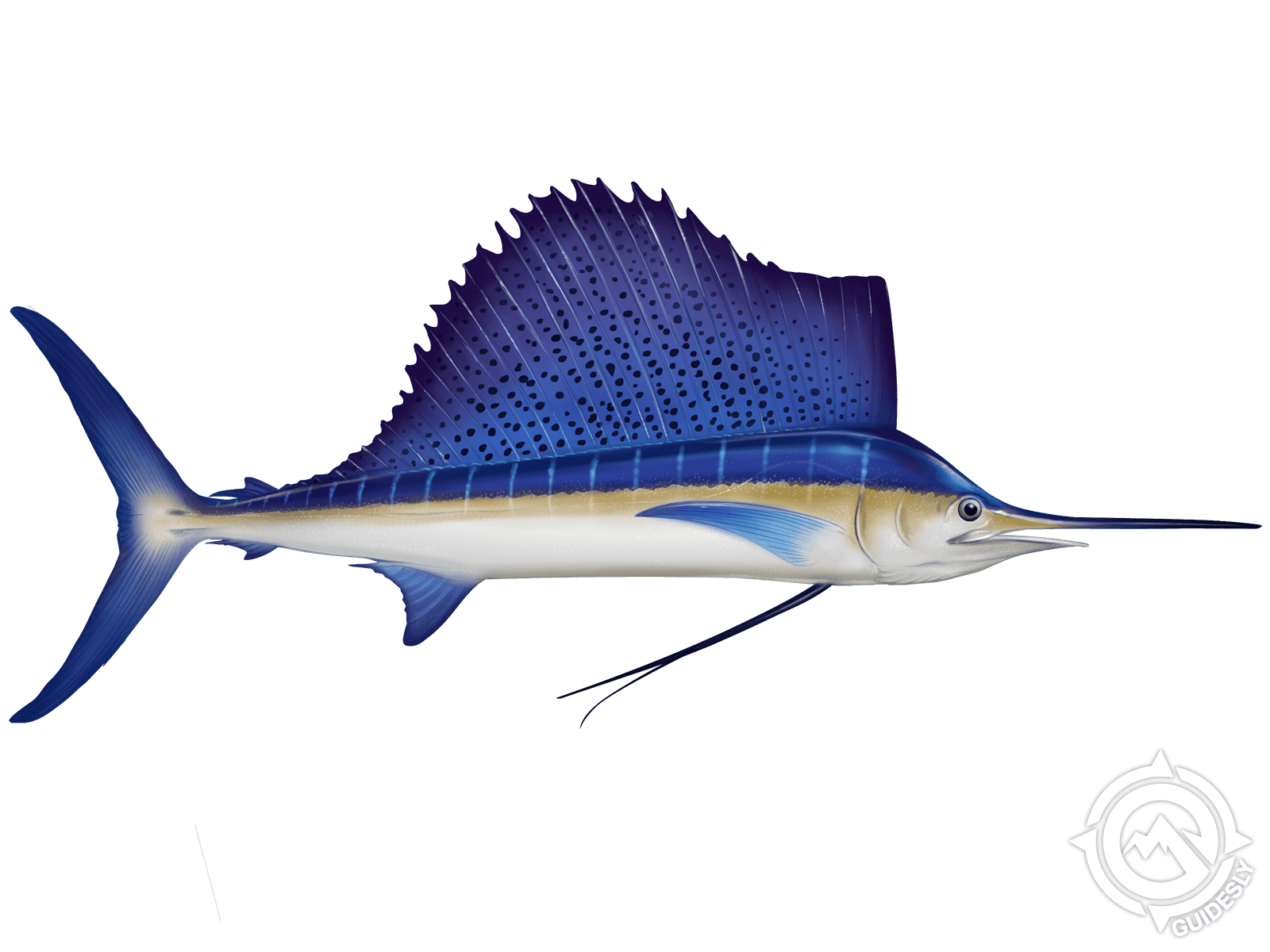
The Atlantic Sailfish is one of the most popular saltwater gamefish. It has a blue to gray metallic color with a majestic sail-like dorsal fin (which is why it’s called a sailfish) and like other marlins, it has a billed-snout. They are a close relative of the swordfish and barracudas. The Atlantic sailfish is a carnivorous species that likes to hunt school of fishes like sardines, anchovies, and mackerel. They’re also known to prey on squid and crustaceans.
Interesting Facts About the Atlantic Sailfish
- Considered to be the fastest fish in the world but a lot of scientists disclaimed the 68 mph speed since it was recorded when it was leaping out of the water. Regardless of the varying findings of their speed, they’re still one of the fastest fish in the world.
- Sailfish usually group and form schools, especially juveniles They can be seen hunting together to eat balls of baitfish. Sometimes they also hunt alone, mostly observed by adults.
- These fish have a special nervous system to change their colors. They use this to communicate with other sailfish when they hunt. They can change from blue, black, and stripes. It’s also been observed that they use their huge dorsal fins to herd baitfishes.
Size and Speed
The Atlantic sailfish is a large fish that can grow up to 10 feet long. Despite their vast length, they’re pretty light for their size (they need to maintain this lightweight to help them preserve their speed ). The biggest Atlantic sailfish ever caught was 142 pounds. Their average length is 7.5 feet and weighs about 50 lbs.
The speed of the Atlantic sailfish is still being debated, some scientists estimated it to be at 68 mph. Recent studies claim that it’s only 22 to 34 mph.
Habitat and Distribution
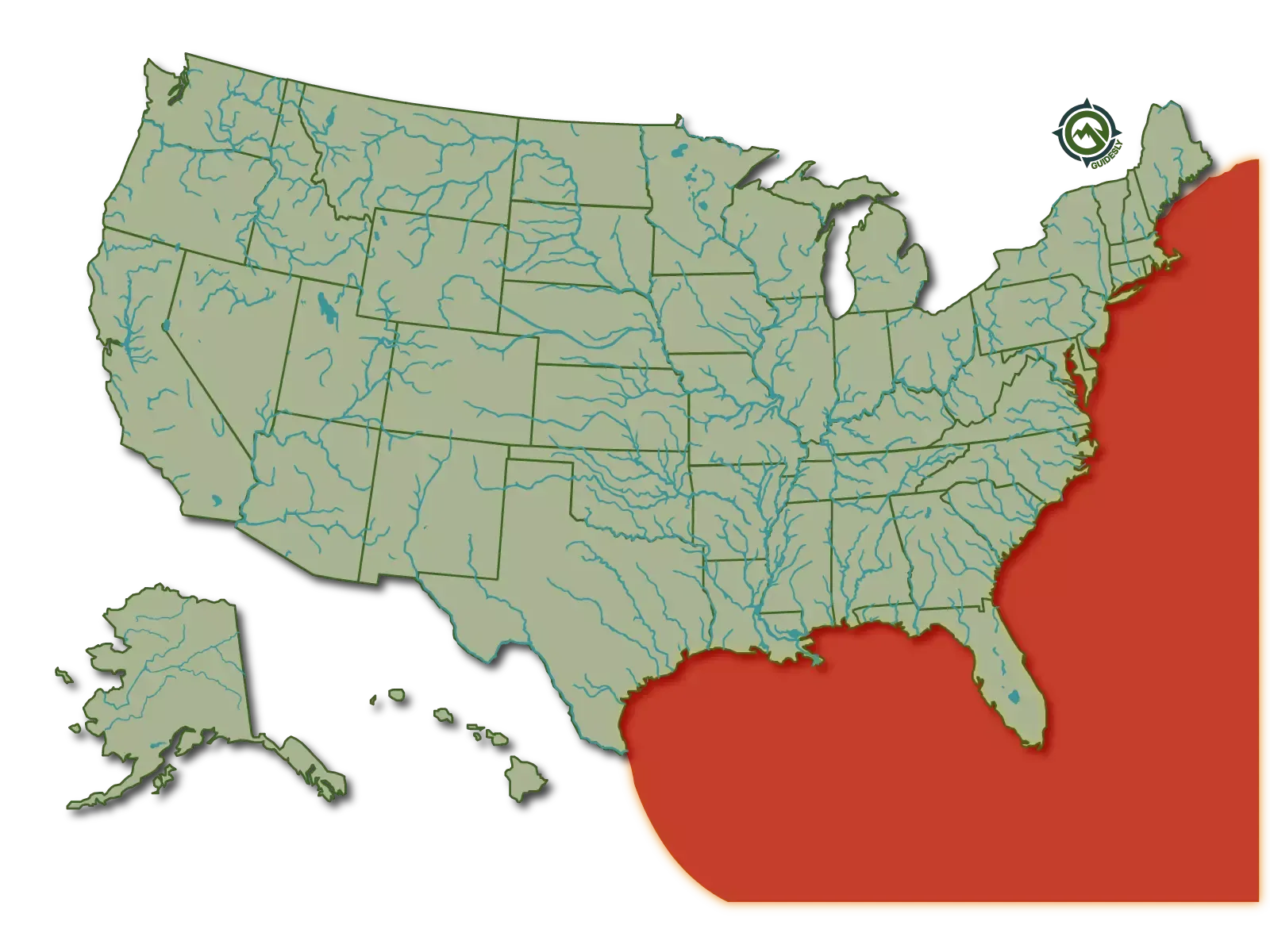
The Atlantic sailfish are epipelagic fish that prefers warm tropical waters with temperatures between 70° to 83°F. They can be seen in coastal areas and nearshore waters. They usually swim near the surface around 30 to 65 feet but they can hunt in deep waters with depths of up to 650 feet.
The Atlantic Sailfish is a highly migratory species that varies depending on the temperature. They migrate by following where the warmer areas are in the western to the eastern Atlantic Ocean. Their spawning season is usually in summer but can be as early as April.
The best fishing spot for the Atlantic sailfish is during the winter in the Florida Key. There is also a popular spot where anglers can catch Atlantic sailfish throughout the year, it’s called the Sailfish Alley in South Florida. The region is between North Miami Beach and Fort Pierce.
How to Catch the Atlantic Sailfish
The Atlantic sailfish are highly sought after game fish by anglers because of the way they battle. They are strong and have long endurance, they’re also known to repeatedly dive and leap out of the water during a fight. Remember to preserve your strength when catching this fish. Set up your gear to sink depths of 30-65, let your boat run slowly to let your leader swim freely. Tease the fish a bit and when the sailfish takes the bite, make your grip firm as it will immediately try to shake it off first. Wait for the fish to run before you try to pull.
Here are some of the recommended fly fishing equipment for the Atlantic sailfish. Use a 12-15 weight rod with 50-pound arbor reels. Use heavy sinking heads to help you get to a nice depth, a nice line length would be 65 to 80 feet. For the leader, Use large 5/0 to 7/0 hooks
Recommended flies for the Atlantic sailfish are tube flies and popper heads. The most effective color for this fish is bright pink and white, blue and white color combination is also said to be effective. For baits, you can use squids, mackerels, or slice tuna.
Blackfin Tuna
Blackfin Tuna (Thunnus atlanticus) Fish Description
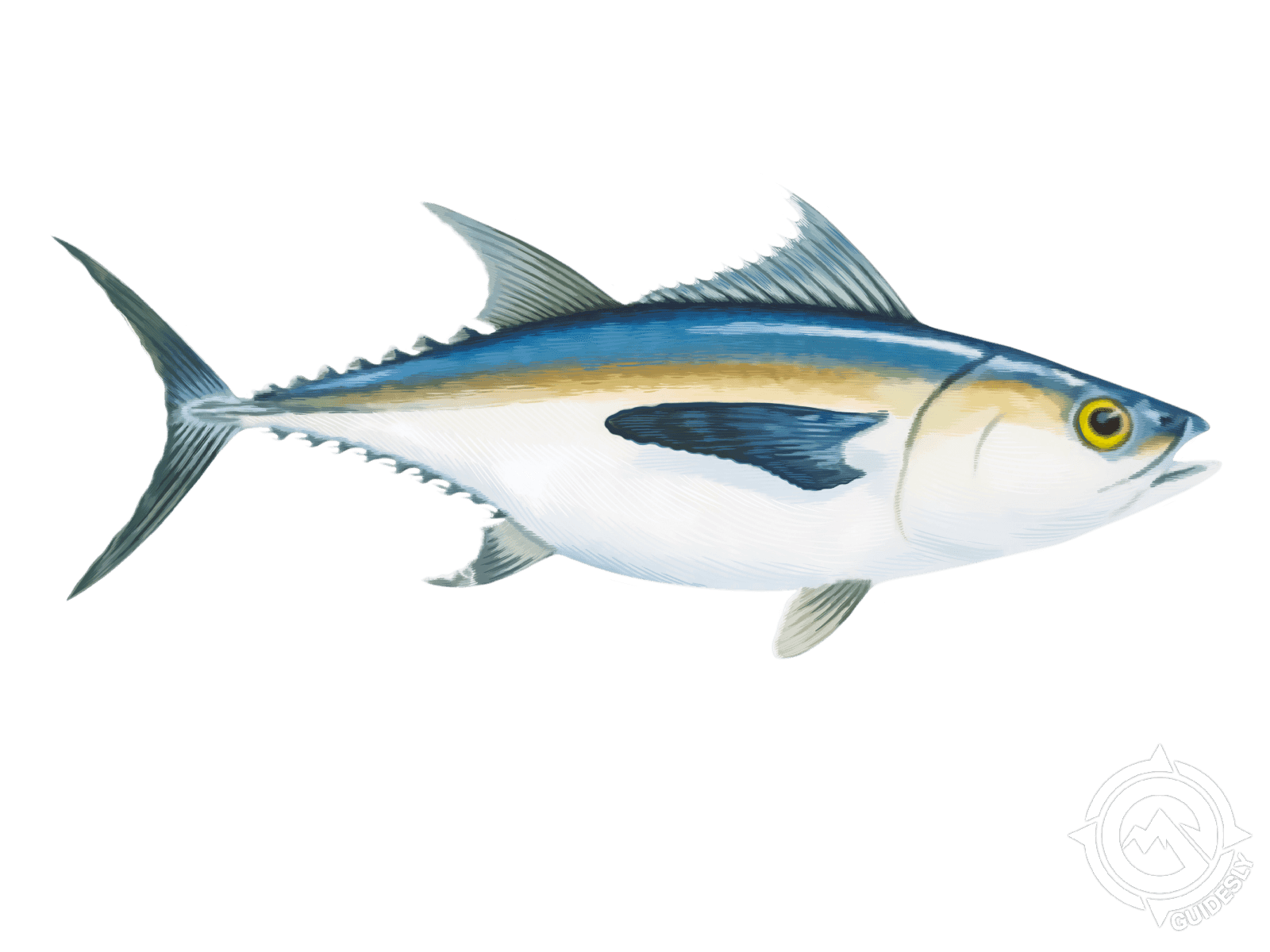
Also known as Deep-Bodied Tunny, Albacore, or Bonite Nore in French, the Blackfin Tuna is the smallest tuna in the Thunnus genus. This fish has an oval-shaped body colored black with some faded yellow near the finlets and on the sides.
Sometimes, the Blackfin Tuna’s sides can be bluish-black, whereas its belly is white. It possesses a vast, brown stripe along the portion of its eye. It has an eye-catching lateral band colored yellow or gold which fades upon its death. Its silvery abdomen has some vertical rows embedded with pale dots.
Another feature that adds to the Blackfin Tuna’s beauty are the bronze reflections on its dusky dorsal finlets.
Diet and Size
In general, Blackfin Tuna reaches up to 39 inches in length and up to 46 lb in weight. On the other hand, it falls prey to Skipjack Tuna, Blue Marlin, and Dolphinfish.
Blackfin Tuna love mesopelagic and epipelagic meals alike. They feast on squid and fish primarily, but they also like the larvae of decapods, stomatopods, amphipods, and crustaceans especially crabs and shrimps.
Interesting Facts About the Blackfin Tuna
- A five-year-old Blackfin Tuna is already considered old since this species grows fast and typically lives for a very short period of time.
- Greenpeace International added many tuna species under its seafood red list; fortunately, Blackfin Tuna were not added to it.
- The Blackfin Tuna is a migratory species that creates big schools along with Skipjack Tuna.
- Blackfin Tuna transfer to more temperate waters during summer; this species has a limited range in the US.
- Despite its wide array of food choices, Blackfin Tuna can be cannibalistic.
- The Blackfin Tuna can host many parasites including copepods, gillworms, tapeworms, and flukes.
- Its genus name Thunnus is Greek for “tuna”.
Blackfin Tuna — Fishing Techniques
The Blackfin Tuna is listed as one of the most important species for both commercial and recreational fisheries. Anglers love to catch them because they are noted for being fierce fighters. Moreover, their flesh is superbly tasty; they are usually marketed fresh then processed and canned.
Some of the most common methods used to catch them are drift fishing, and trolling. You can also try capturing them using live bait and poles. According to the most seasoned anglers, what works best in hauling Blackfin Tuna are vertical jigging and chunking. Make sure to scale down your leader and hooks; this is because Blackfin Tuna have sharp eyesight.
Apart from using #30 fluorocarbons for leaders, you should also have a 5/0 to 6/0 size circle hook. Note that you can lure Blackfin Tuna into your boat by using some live chum particularly pilchards.
Blackfin Tuna Habitat and Distribution
Most of the Blackfin Tuna population is concentrated in the Gulf of Mexico to Rio de Janeiro, the Caribbean Sea, and Martha’s Vineyard in Massachusetts. They prefer swimming in warm waters over 68 °F.
Blackfin Tuna usually occur in oceanic waters near the coastline. They usually inhabit the areas near the continental shelves. They are at their peak during autumn, winter, and spring in Florida Keys.
Blue Marlin
Blue Marlin (Makaira nigricans) Fish Description
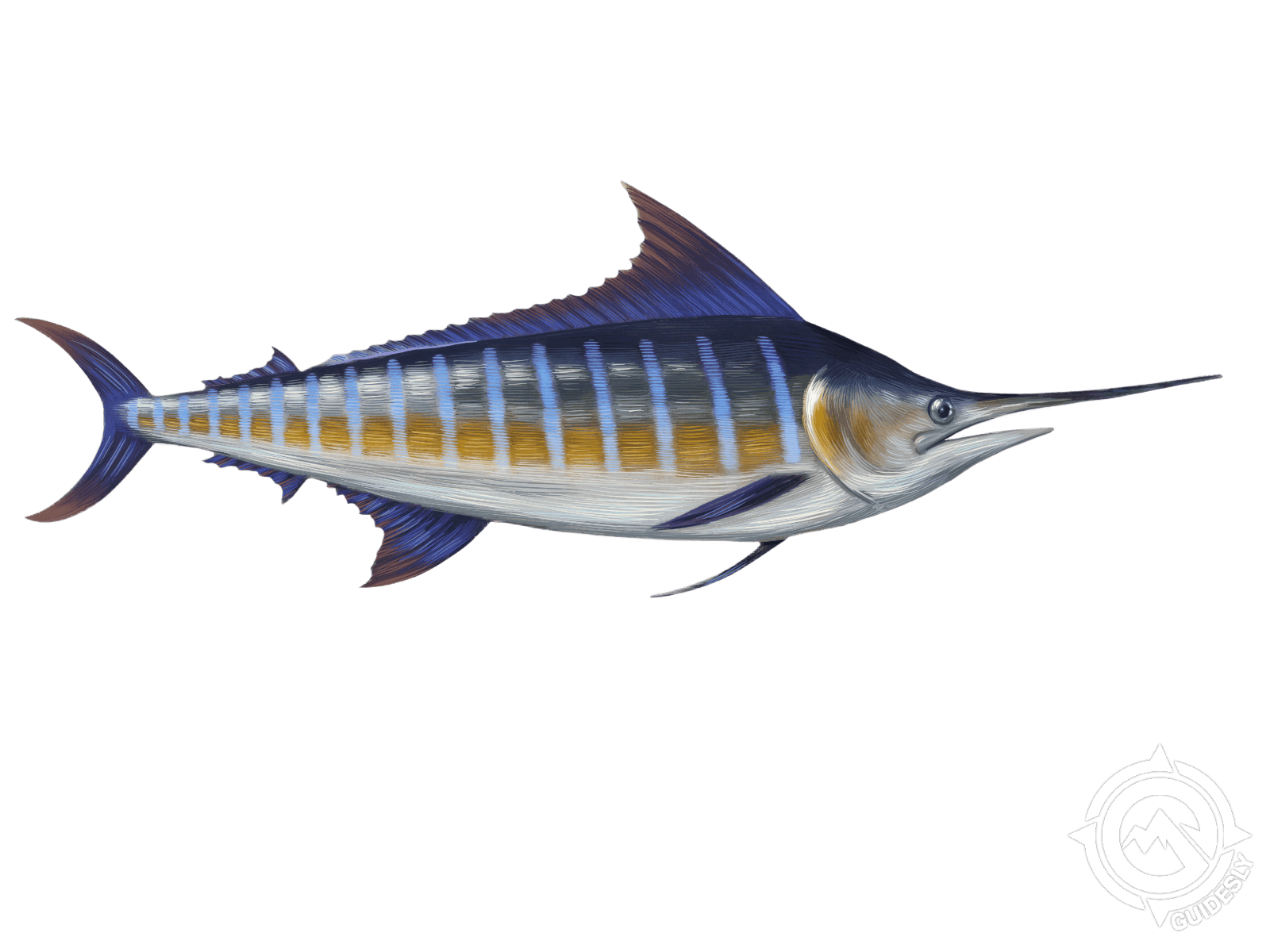
The Blue Marlin may look slightly similar to the White Marlin but there are clear cut differences. The first most noticeable difference would be the dorsal fin wherein the Blue Marlin’s never exceeds the maximum body depth. Another difference for the Blue Marlin is its pectoral fins which are foldable. Unlike the others, the Blue Marlin also has a cylindrical body.
The Blue Marlin also has a dark cobalt dorsal side which slowly blends with the silvery-white underbelly. It also has several bars that are cobalt and pale-colored that decorate the rest of its body. Blue Marlins also have the ability to change their skin color. Their bodies, like other billfish, are covered by iridophores which allow them to reflect the light to change the color of their skin.
As a billfish, Blue Marlins have a long spear-like snout which serves as their weapon for finding more fish.
Blue Marlin Diet
Young Blue Marlin eat zooplankton but can sometimes eat fish eggs that drift by. However, as they grow older, Blue Marlins start feeding on larger fish. They eat Mackerel, Bullet Tuna and, Skipjack Tuna which serve as a big portion of their diet. Once Blue Marlins reach an optimum size, they are also reported to hunt down Yellowfin Tuna and Big Eye Tuna.
Blue Marlin Size
Interestingly, female Blue Marlins are four times bigger than male Blue Marlin. Female Blue Marlins can weigh 1190 to 1810 lbs and can reach a maximum length of 16 ft. Male Blue Marlins rarely exceed 350 lbs.
Interesting Facts about the Blue Marlin
- Blue Marlins are considered the biggest among all the Billfish species.
- Blue Marlins caught past 1000 lbs are called granders.
- In terms of lifespan, female Blue Marlins live longer than males. Female Blue Marlins can live up to 27 years while males only live up to 18 years.
- When they reach maturity, they become less of a target. However, the Blue Marlins can still be hunted down by the Great White Shark.
- Blue Marlins are migratory fish.
- Their path usually leads them to move tangent to the equator.
- Some people are afraid of eating Blue Marlin due to the high levels of Mercury in its meat.
Blue Marlin – Fishing Techniques: How to Fish for a Blue Marlin
Because they’re bigger, Blue Marlins are more prone to fatigue. However, Blue Marlins are known for their amazing acrobatics, their aggressive fighting spirits, and their powerful attacks.
Since they have a preference for warmer waters, Blue Marlins are best found near Hawaii, Panama, or Mexico. Depending on where you are, sometimes – Blue Marlins can be fished all year round being accompanied by their Black cousin. However, the size of the Blue Marlin will depend on your area.
As for the lure, there are a variety of lures you can use via trolling. In Kona, Hawaii, they developed a way on how to troll the Blue Marlin with an artificial lure. But that doesn’t mean live bait isn’t useful. As an apex predator, Blue Marlins love it if their prey puts up a fight.
For your equipment, make sure it's high, industrial grade. These are powerful, heavy fish. They can break your equipment if you’re not careful.
Blue Marlin Habitat and Distribution
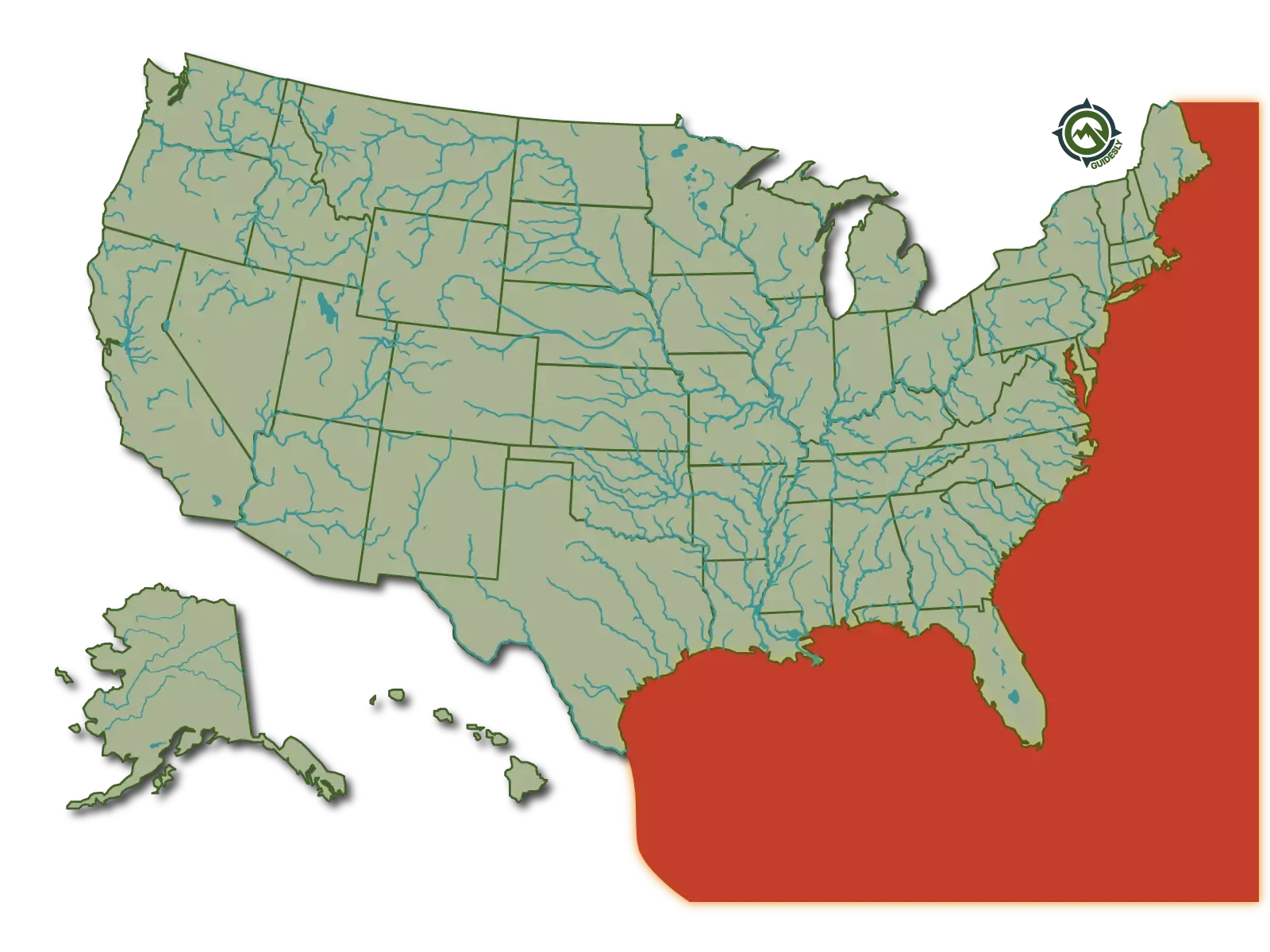
Blue Marlin are migratory fish so you’ll have to run along the equator to find them. They’re usually found swimming across the waters running along the equator. They usually lurk in the Pacific, Atlantic, and Indian oceans especially when the waters are warmer. However, Blue Marlins seem to be available near the Gulf of Mexico all year round. Some also say that Blue Marlins are best caught in Kona, Hawaii.
Greater Amberjack
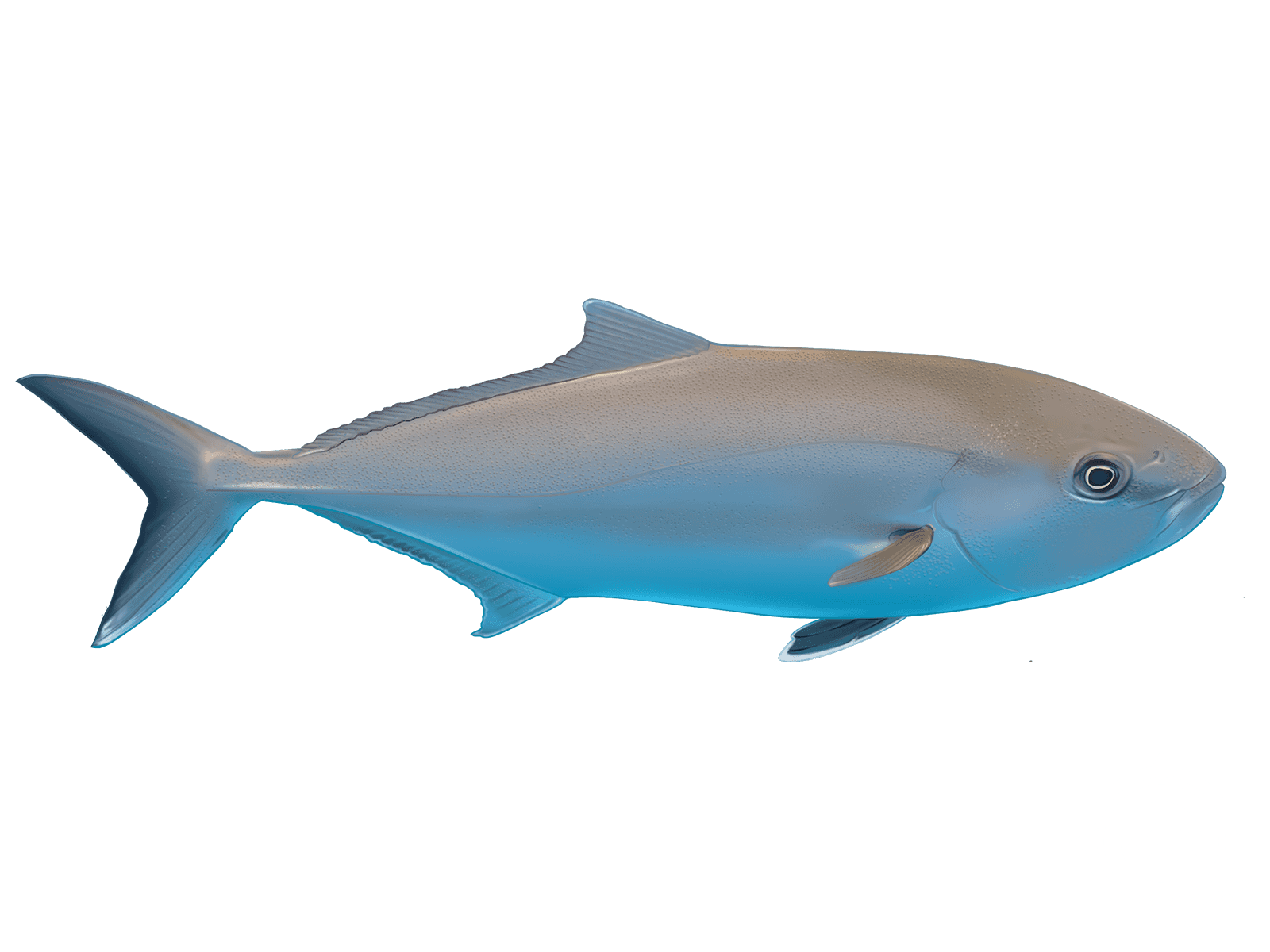
Greater Amberjack (Seriola dumerili) Description
The greater amberjack is a saltwater game fish that can reach 6 feet in length. The fish’s body is a bluish-grey or dark grey color, with a silvery-white stomach. You can also identify this species by the amber stripe in the middle of its body. The dark amber strip on their head extends to its first dorsal fin becomes a darker color when the fish is feeding or excited. It is a slender fish with a pointed head and small eyes.
Interesting Facts
- The Greater Amberjack is a popular recreational game fish in North America because of its size. However, being at the apex of the marine food chain also means that this fish carries a considerable risk of ciguatera poisoning.
- It is greatly prized for its high quality meat and commercial value.
- Currently, it is considered one of the most important species in the commercial production of fish around the Mediterranean, and in North and South America.
Size
This fish grows to 6.2 feet in length and on average reach a weight of 39 pounds. They live up to 17 years, reaching sexual maturity at around 4 to 5 years old. Typically, females grow larger and live longer than their male counterparts.
Fishing Habitat and Distribution
The Greater Amberjack can be found on the eastern coast of the United States in the Atlantic Ocean the Gulf of Mexico to the Caribbean Sea.
Diet and Spawning
The Greater Amberjack primarily feeds on smaller fish and marine invertebrates. Their diet includes squid, crustaceans, sardines, and bigeye scad.
The spawning period is from April to May.
Fishing Technique - How to catch Greater Amberjack
Anglers can use trolling, casting or drifting techniques.
Amberjacks are most often caught aboard boats with heavy rods and reels with lines testing 50 pounds or more. An experienced angler with light tackle can be successful with spinning and baitcasting rigs, and even fly rods. Plugs, spoons, jigs, or even fly streamers and poppers can be used. Both metal jigs or live baitfish are effective in Amberjack fishing since the species is not that picky when it comes to its prey. The best bait with heavy tackle though is live fish.
Wahoo Fish
Wahoo (Acanthocybium Solandri) Fish Description
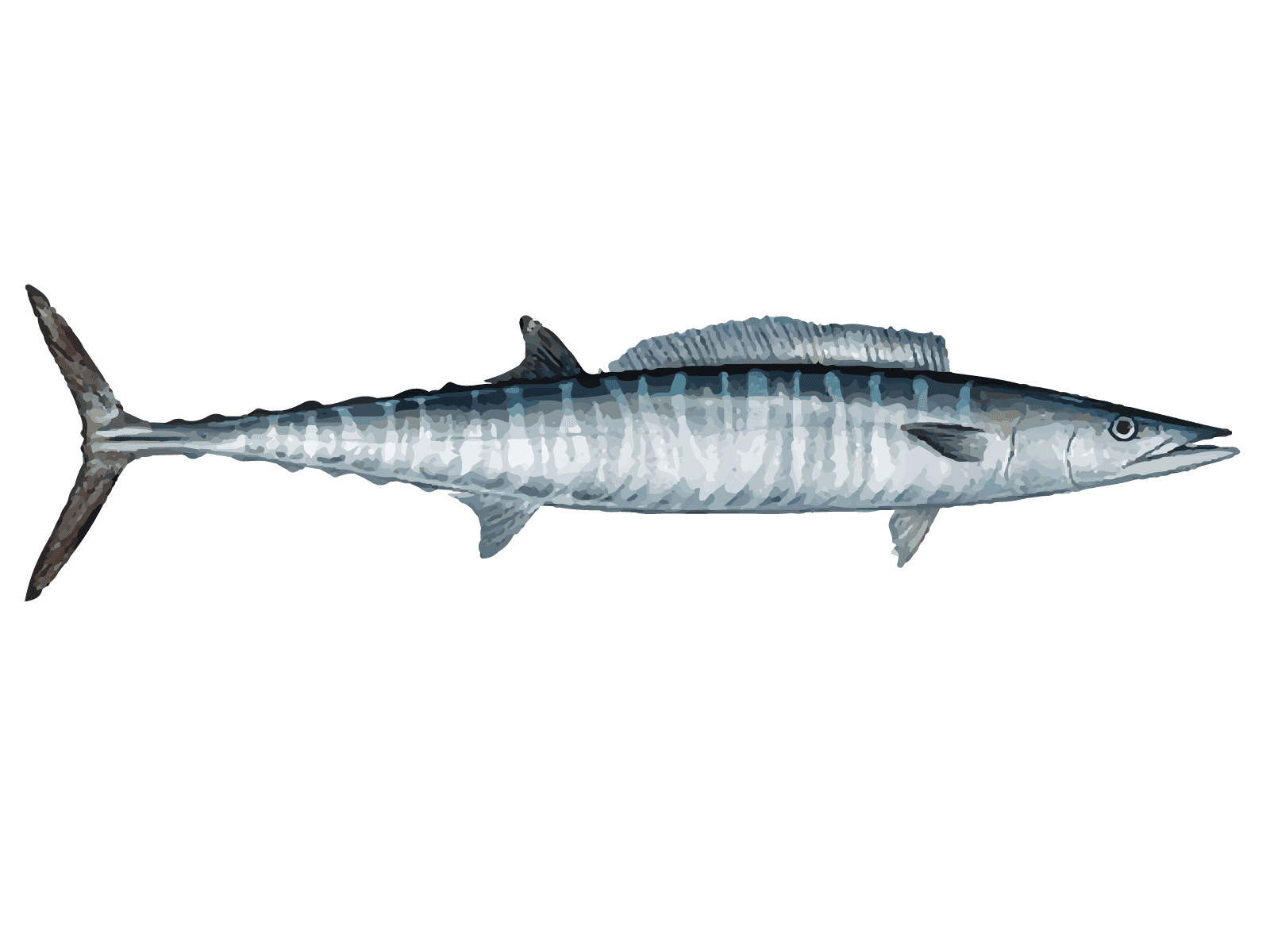
The wahoo has a slender, elongated body covered with small scales. It has a shimmering blue back that may appear green from above and has silvery sides with zebra-like blue stripes or bars. Its underside is silvery-white.
It has a beak-like snout, large mouth, and sharp serrated teeth. The wahoo has a fold of skin that covers its jaw when the mouth is closed which differentiates it from the Spanish mackerel and Atlantic mackerel.
It has 2 dorsal fins that trail off into 8-9 finlets, leading to a forked caudal fin. The anal fin is aligned below the second dorsal fin and has 9 finlets. Its lateral line stretches across its entire body and curves under the first dorsal fin.
Spawning
The Wahoo reproduces through broadcast spawning, where females release eggs simultaneously that males discharge sperm. This increases the chances of fertilization and lessens the odds of the eggs being consumed. Adults reproduce multiple times within the year-round spawning season, usually near Florida and the Caribbean. Females can produce several million eggs a year, and this high reproductive rate and accelerated growth have kept this fish safe from overfishing.
Size and Speed
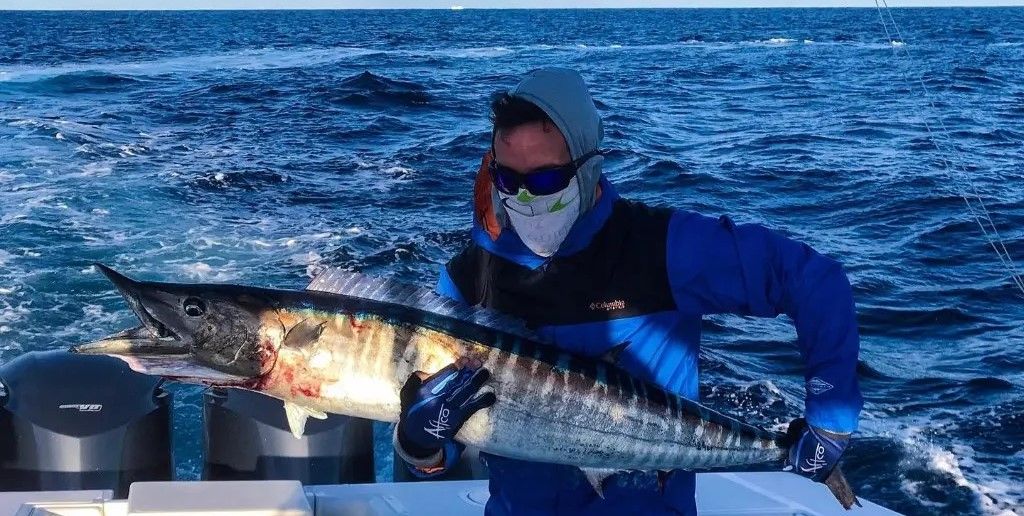
The Wahoo grows fast and is generally 3 to 5 feet, but has been documented at 8 feet 2 inches. The IGFA All-Tackle world record is at 184 lb caught in Mexico in 2005.
It’s one of the fastest fish with an average speed of 48 mph and a top speed of up to 60 mph. Their spindle-shaped body and endurance make them successful hunters.
Interesting facts about the Wahoo
- Ono, another name for the Wahoo, means “good to eat” or “delicious” in Hawaiian
- Its colors fade immediately upon death
- It is unable to regulate its body temperature
- It is prey only to the largest ocean predators, such as sharks and billfishes
- The Wahoo’s speed makes it a prized game fish similar to barracuda. It’s also coveted for its delicate flaky flesh, making it a premium-priced food fish.
Diet
This large fish has a very diverse diet that consists of squid, tuna, little tunny, porcupine fish, flying fish, dolphinfish, jacks, herring, pilchards, scad, frigate mackerel, butterfish, and lantern fish, as well as many other pelagic species.
Is Wahoo Good to Eat?
Wahoo fish is a popular game fish found in the warm waters of the Atlantic, Indian, and Pacific Oceans. This species is known by names such as Ono in Hawaii and Peto or Beto in Mexico. The question that arises for most people is whether Wahoo Fish makes for a good meal or not.
Wahoo has a firm texture with white meat that's mild and sweet tasting. It's often compared to other pelagic fishes like tuna, swordfish, and mahi-mahi due to its delicate flavor. Wahoo also has low oil content making it ideal for those who prefer less oily seafood. This fish is well known for Wahoo fish tacos. Wahoo is a healthy, extra-lean protein, low in saturated fat and sodium. Wahoo is rich in omega 3's, niacin, vitamin B6, vitamin B12, and other nutrients.
When cooked properly, wahoo can be an exceptional food item that satisfies even the most discerning palates.
Fishing Techniques: How to Catch a Wahoo
In the Gulf of Mexico, the Wahoo doesn’t stray far from the shore. They can be found near oil and gas platforms, particularly near Port Aransas in Texas. The angler will have success here especially during the cooler months. They are abundant in Florida from July to November and fishing Wahoo peaks in Hawaii from May to October. However, you may find the best place for Wahoo fishing is in their native Bahamas when they are migrating in high numbers between March and November.
High-speed trolling at 12-15 knots with a 4-6 lure spread is commonly used to catch this fish. A fast trolling rig will feature a 30-50 wide reel with wire leaders since the wahoo’s teeth can cut through mono or fluorocarbon easily. Anglers can use a double braided line attached to an 80-100lb leader about two feet long. Minnow lures, bulletheads, and plungers are some favorite lures to use.
If slow trolling (around 8-10 knots), fresh ballyhoo baited on double J-hooks with a rubber skirted resin head lure, or a diving-lipped lure is effective. Using jigs under floating debris and chunking are also efficient fishing techniques.
Habitat & Distribution

The Wahoo is found in all tropical and subtropical waters worldwide but may migrate to higher latitudes during warmer months. Its native range includes the Atlantic, Indian, and Pacific Oceans.
In the north Atlantic, it’s abundant during the summer from North Carolina and Bermuda and year-round in Florida to the Gulf of Mexico.
The Wahoo is a pelagic open-ocean fish that is often drawn toward drifting objects is commonly found in waters up to 66 feet deep. While it’s known for being solitary, it may form small groups of 2-3 individuals and will form larger groups when mating.
About the Sea Horse
%2F%2Fusers%2Fc304790d-74c4-4726-bfae-08ef6cd001e1%2Fboat_picture%2Fimg_6847%25202.jpg&w=1920&q=75)
Vehicle Guest Capacity: 6
Manufacturer Name: Cat
Maximum Cruising Speed: 33
Number of Engines: 2
Horsepower per Engine: 500